


1.6mm Aluminium PCB/Double Side PCB Board
- Product Details
Aluminum Printed Circuit Boards Contain a Thin Layer of Thermally Conductive Dielectric Material that Transfers Heat
Aluminum based PCB can consistently increase durability and long-term reliability of a final product through temperature control and associated reductions in failure rates. Aluminum designs also deliver better mechanical stability and lower thermal expansion levels than other available materials.
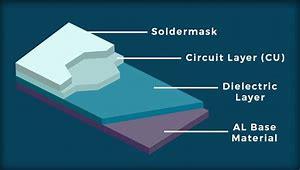
Aluminum PCB Layers
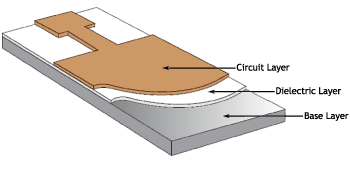
Aluminum PCBs are a unique layered system comprised of the following layers.
Circuit Layer:
Printed circuit foil with thickness of 1oz to 5 oz.
Dielectric Layer:
The dielectric layer can have many different options which offer electrical isolation with minimum thermal resistance. Also used to bond the circuit layer and base material together. Each specific dielectric has its own UL recognition. See below for a listing of the different materials that we have in stock to ensure a wide variety of options with quick delivery.
Base Layer:
The base layer is most often aluminum but can also be copper. The most commonly used thickness is 0.040"(1.0mm) although many alternative thicknesses are available.
BENEFITS OF ALUMINUM PCBS
- Heat dissipation is dramatically superior to standard FR-4 constructions.
- The dielectrics used are typically 5 to 10 times as thermally conductive as conventional epoxy-glass and a tenth of the thickness
- Thermal transfer exponentially more efficient than a conventional rigid PCB.
- Lower copper weights than suggested by the IPC heat-rise charts can be used.
APPLICATIONS OF ALUMINUM PCBS
Although Power Converters and LEDs are the largest users of these products, Automotive and RF companies are also looking to take advantage of the benefits of these constructions. While a single layer construction is the simplest, other configuration options are available at Xing Da, including:
1.FLEXIBLE ALUMINUM PCB2.HYBRID ALUMINUM PCB
3.MULTILAYER ALUMINUM PCB
4.THROUGH-HOLE ALUMINUM PCB


